
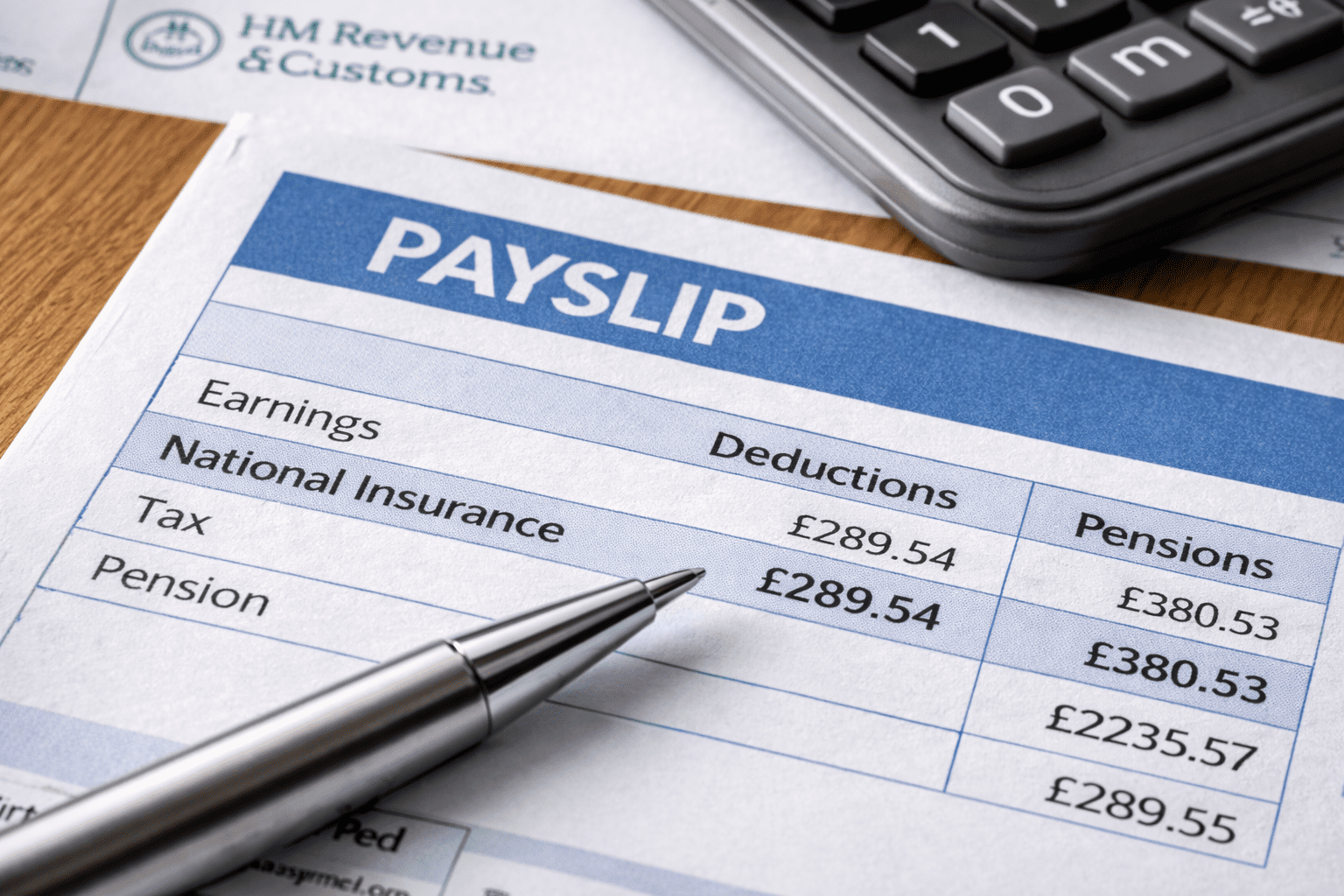
As an employer, you are responsible for operating National Insurance through payroll. This means deducting employee National Insurance contributions from wages and paying both the employee’s and the employer’s contributions to HMRC.
National Insurance for employers is different from self-employed contributions. Employers deal with Class 1 National Insurance, which is calculated and reported each time payroll is processed.
What Is Employer National Insurance?
When you run payroll, there are usually two National Insurance elements:
- Employee (Primary) Contributions – deducted from the employee’s pay.
- Employer (Secondary) Contributions – paid by the business on earnings above the Secondary Threshold.
Employer contributions are an additional cost to the business and are calculated automatically through payroll software.
All National Insurance deductions and payments are reported to HMRC via the Full Payment Submission (FPS) under Real Time Information (RTI).
What Is Class 1 National Insurance?
Most employers deal with Class 1 National Insurance.
It applies to employees and company directors and is calculated based on earnings.
Class 1 includes:
- Employee contributions (deducted from pay)
- Employer contributions (paid by the business)
Unlike self-employed National Insurance, Class 1 is not a flat weekly amount. It is calculated based on earnings and thresholds set by HMRC each tax year.
How Much National Insurance Does an Employer Pay?
Employers pay National Insurance on earnings above the Secondary Threshold.
The amount due depends on:
- The employee’s gross pay
- Current HMRC rates and thresholds
- Whether the employee qualifies for special categories (for example, under 21s or apprentices)
Employer National Insurance is a deductible business expense for Corporation Tax purposes.
Directors and National Insurance
Company directors are subject to special annual calculation rules for National Insurance.
Instead of being assessed strictly per pay period, directors’ contributions are often calculated cumulatively across the tax year. This can result in different National Insurance figures compared to regular employees.
Employment Allowance
Some eligible employers can reduce their Employer National Insurance bill through the Employment Allowance.
This allowance allows qualifying businesses to reduce their annual Employer National Insurance liability, subject to eligibility criteria set by HMRC.
Summary
FNational Insurance for employers is operated through payroll and includes:
- Deducting employee contributions
- Paying employer contributions
- Reporting payments to HMRC via RTI
- Applying the correct thresholds and rates
However, if you calculate National Insurance incorrectly, HMRC can charge penalties and interest. In addition, correcting payroll errors takes time and often creates unnecessary cost.
For this reason, you should review your payroll processes regularly and ensure your system applies the correct rates each pay period. Accurate payroll protects your business and keeps you compliant.n result in HMRC penalties, interest, and correction costs. Accurate payroll processing is essential.