

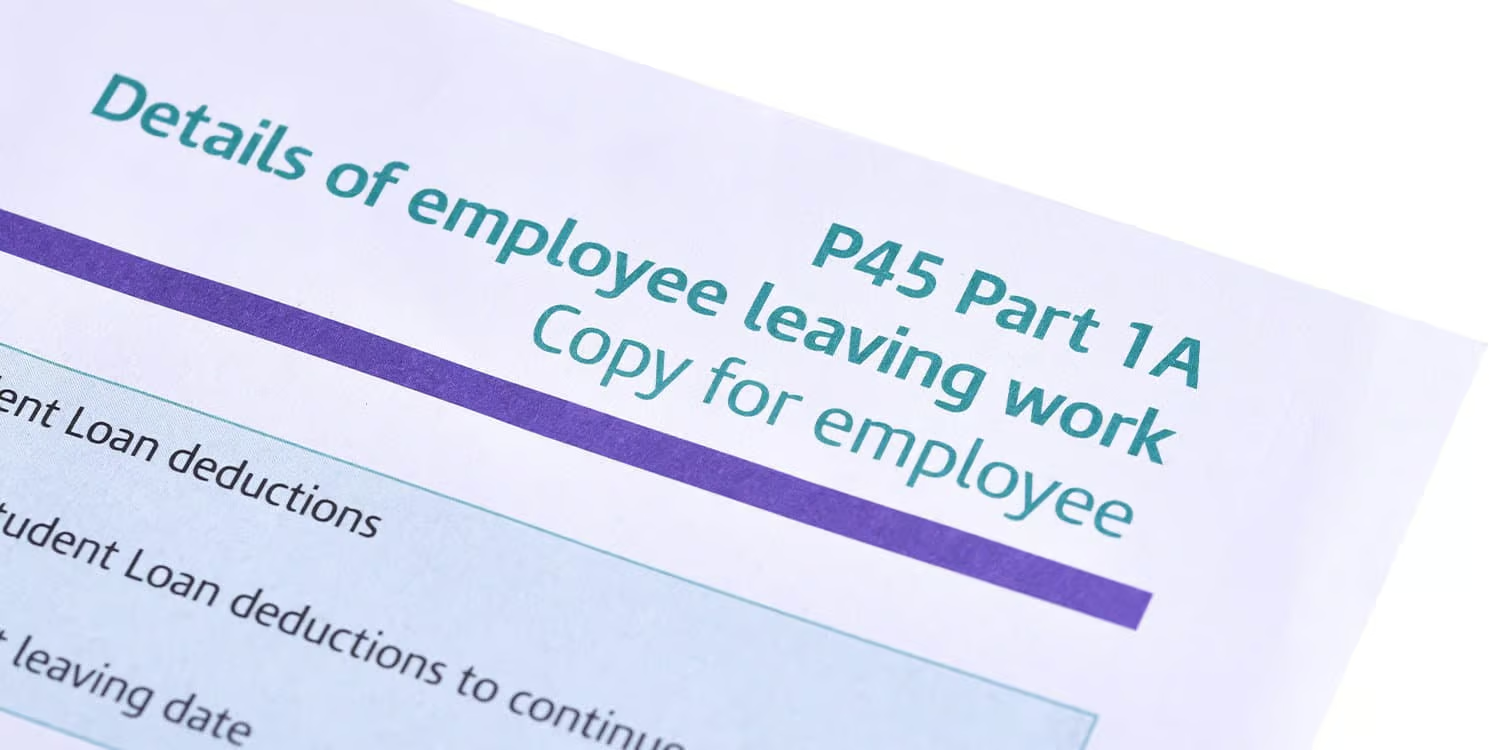



We’re often asked whether employers can accept electronic P45s, where a new employee has received it by email rather than in paper form.
With payroll processes becoming increasingly digital, it’s a fair question, but it’s important to understand what is and isn’t acceptable, and where the risks lie.
How do P45s work today?
When an employee leaves a role, employers are required to provide a P45 showing their pay and tax details for that employment.
While the structure of the P45 remains the same, the process is now largely electronic:
- Information is submitted to HMRC through RTI
- Employees are often given a digital copy (for example, a PDF)
- New employers use this information to set up payroll
So in practice, electronic P45s are now common.
Can employers accept electronic P45s?
Yes, in most cases, employers can accept an electronic P45.
However, the key point is not the format, but the accuracy of the information.
If incorrect or duplicated details are used when setting up payroll, this can result in:
- The wrong tax code being applied
- Personal allowances being duplicated across multiple employments
- PAYE being operated incorrectly
Where there is any doubt, employers should use HMRC starter checklist which you can download here or wait for confirmation of the correct tax code.
Alternatively, you can contact the HMRC Employer Helpline on 0300 200 3200. While they won’t be able to discuss full details of an employee’s tax affairs, they can confirm whether the tax code you are using is appropriate.
Why accuracy matters
Employers are responsible for operating PAYE correctly.
Relying solely on employee-provided information, whether electronic or printed, can create risks if:
- The employee has more than one job
- The P45 is out of date
- The information has been reused incorrectly
These situations can lead to underpaid tax, which may need to be corrected later.
For more detail on how issues like this can lead to problems, see our guide on
How to Appeal an HMRC Late Payment Penalty
Best practice for employers
To reduce the risk of payroll errors:
- Request a P45 where available
- Treat it as supporting information, not the sole source of truth
- Use the HMRC starter checklist where needed
- Apply tax codes carefully and review any unusual cases
Taking a cautious approach at the onboarding stage helps prevent issues later on.

❓ Q&A: Electronic P45s and Employer Responsibilities
Can employers accept electronic P45s?
Yes. Electronic P45s are now standard, and employers can accept them provided the information is accurate and relates to the correct tax year.
Is a printed or emailed P45 valid?
Yes, the format does not matter as much as the accuracy of the information. Employers should still verify details where needed.
What are the Risks of using electronic P45s
The main risk is operating PAYE incorrectly, particularly where employees have multiple jobs or incorrect tax codes are applied.
Who is responsible if something goes wrong?
Employers are responsible for ensuring PAYE is operated correctly. Errors may need to be corrected and could lead to HMRC queries.
What should employers do if they are unsure?
Use HMRC starter procedures and wait for confirmation of the correct tax code rather than relying solely on employee-provided information.
Should employers still ask for a P45?
Yes, it remains good practice, but it should be used alongside other checks.
Getting payroll right from the start
Situations like this highlight how small decisions at the onboarding stage can have wider consequences if not handled carefully.
If you’d like support reviewing your payroll processes or ensuring everything is set up correctly:
Take a look at our Payroll Services
Or get in touch to discuss your payroll